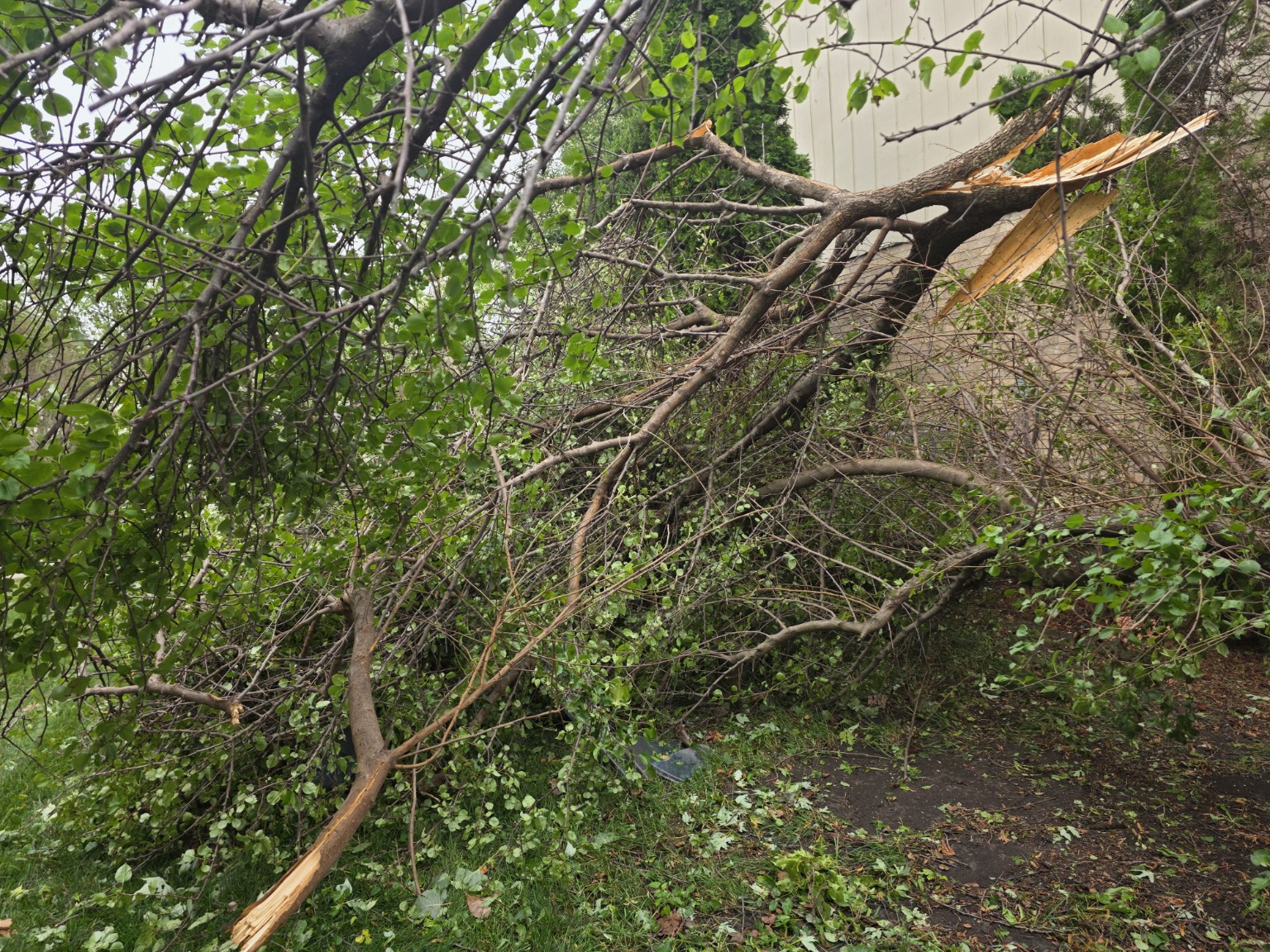
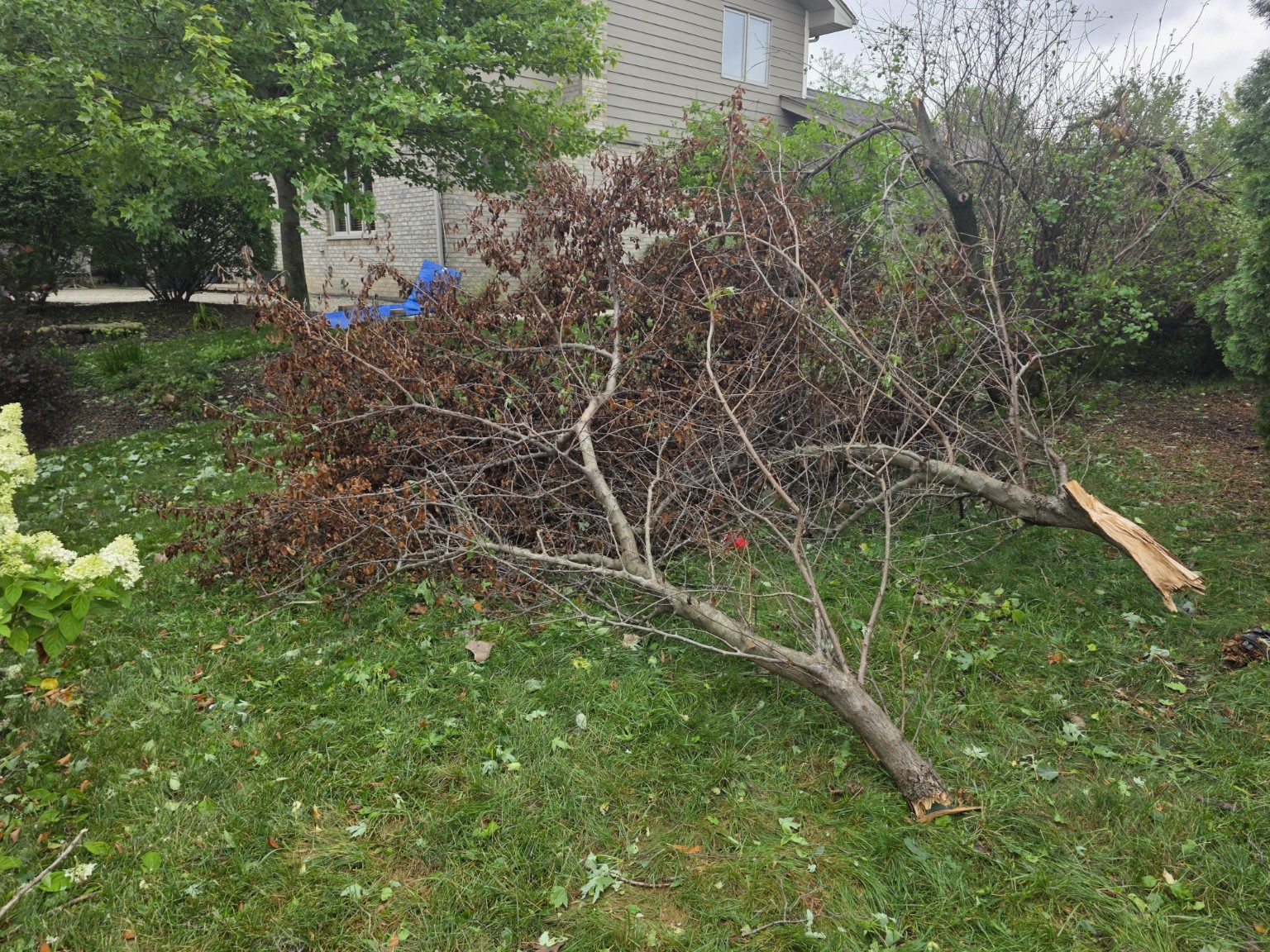
A few days ago, a storm came through my neighborhood. By the time it was over, several of the large trees in my front yard had split apart, broken, or fallen. There were branches, leaves, and twigs everywhere. It was a mess!
Oddly enough, my wife and I had been talking about getting rid of those trees for years, and every conversation ended the same way.
“Those things are huge. It'll be way too expensive. When would we find the time to do anything? We'll deal with it later.”
Well…later never came.
Until the storm made the decision for us.
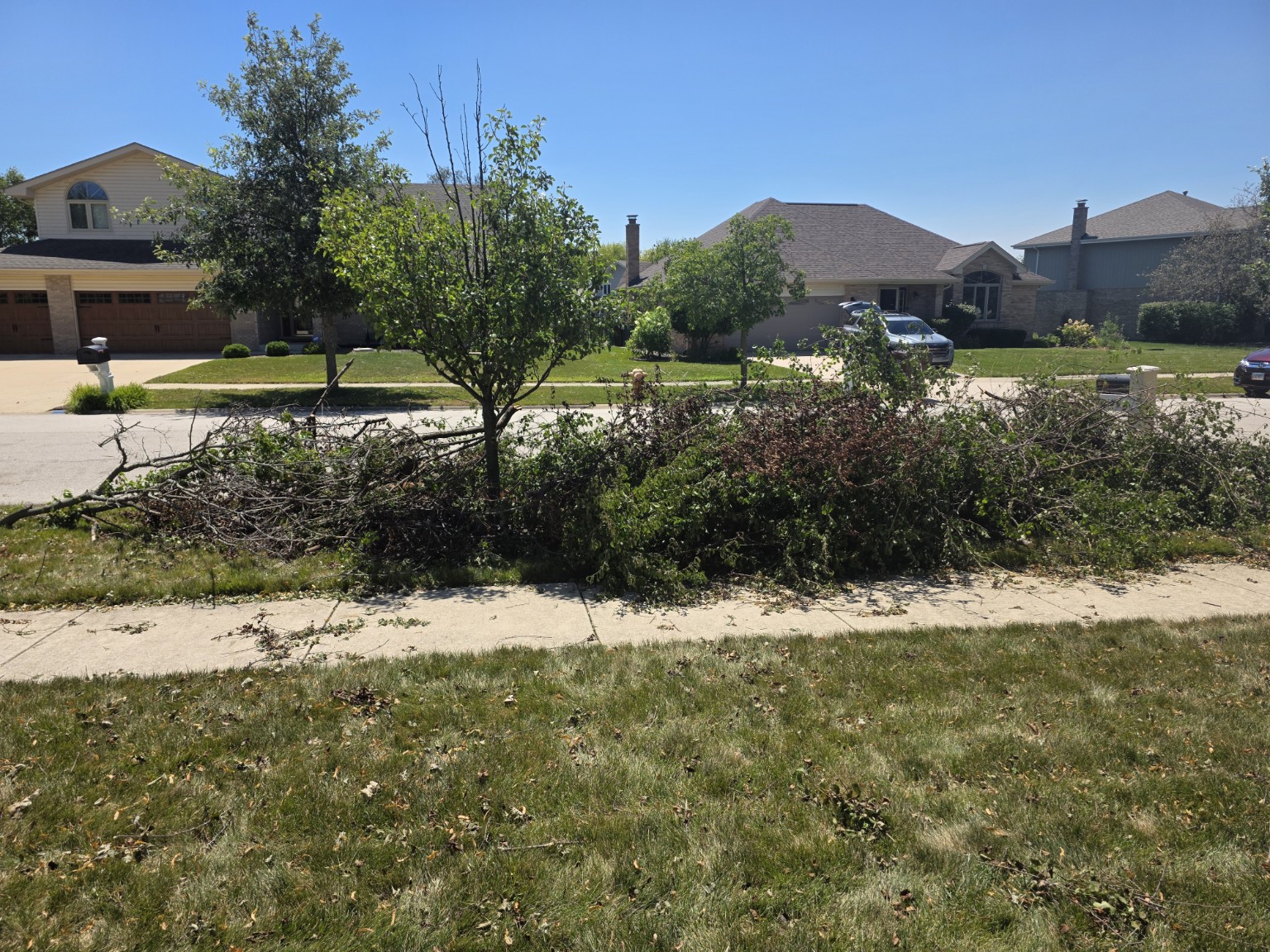
The next morning, my father-in-love and I spent hours cutting branches, hauling logs, and dragging huge, heavy piles of wood to the curb. Oh, and did I mention the weather? It was hot! I was exhausted.
Uncomfortably inconvenient!
But then, somewhere in the midst of all this cleaning…I started laughing.
Let's be clear, nothing about this was funny, but I still started laughing.
Because once the trees were cut down and taken to the curb, they didn't look nearly as big as they had before the storm.
For years, those trees had occupied so much mental space. They felt enormous. They represented an expensive project, a difficult decision, and a problem that could just wait until next season.
But once they were on the ground, they were just…wood.
Heavy? Yup.
Time-consuming? Absolutely.
Impossible? Not even a little bit.
That's when it hit me.
And the “it” had very little to do with trees.
I had spent years carrying the mental burden of this tree task. Though uncomfortable and inconvenient, the task was completely manageable once I began. Not to say that I didn't pop an Aleve afterward because I'm not a spring chicken anymore, lol.
Then, while I'm standing in my yard giggling at the chaos, my neighbor said something that further challenged my thinking about the experience.
My neighbor has lived next door for more than 20 years. As we talked, he mentioned that he remembered speaking with the previous owners when they were planting the trees.
“They didn't plant them deep enough.”
That one sentence, shared through simple neighborly chitchat, explained everything.
His yard was in the same storm as mine. His trees were still standing.
The difference wasn't the wind.
It was the roots.
Enter the second “it”:
We talk as though storms create weakness, but often they reveal it. Storms don't invent fragile foundations; they expose them. The same is true beyond our yards.
A financial crisis doesn't suddenly create poor spending habits. It reveals them. Conflict doesn't create a lack of trust. It exposes it.
Organizational failure doesn't start with the crisis. The crisis just uncovers years of neglected culture, ignored warning signs, or shallow foundations.
Storms aren't always problems…sometimes, they're truth tellers.
This is true for my yard. This is true for our world.
We live in a time when every national crisis tempts us to believe that something has suddenly gone wrong. A pandemic. Political violence. Deepening inequality. Attacks on public education. Racial backlash. We talk about these moments as if they created division and disconnection overnight.
They didn't…they just revealed them.
Storms have a way of exposing what good weather allows us to ignore.
Communities are no different than trees. Schools, churches, nonprofits, neighborhoods. All develop root systems over time. They are shaped by what they value…what they neglect…and what they are willing to confront before the winds begin to blow.
Justice works the same way.
It isn't built during the storm, but cultivated long before we even notice the clouds forming.
When our institutions fail under pressure, the question can't simply be, “How bad was the storm?”
We have to ask, “How deep were our roots?”
That uncomfortable conversation starter forces us to examine years of decisions instead of blaming one difficult moment. Shout out to a good friend, Dr. Nolan, who recently challenged me in this way.
That question, and the reflection it requires, led me to another truth:
The storm wasn't all bad.
I wouldn't have chosen it. I'm not going to pretend I liked it. But it forced me to do something that I already knew needed to happen.
Comfort allowed me to put off doing what needed to be done.
There was always another project, another weekend, or another excuse.
Then the storm, as inconvenient as it was, said, “No, now!” It removed my ability to negotiate with myself.
And once I started, I realized it wasn't the work that I feared…it was beginning.
How many things in our lives stay “too big” simply because we refuse to start? We tell ourselves that these things are mountains when, in fact, they only look that way because we've been measuring them from a distance.
Growth rarely requires comfort. That's why they're called “growing pains,” not “growing perks.”
Now, I don't want to enter into the realm of “everything happens for a reason” or “your breakthrough is coming” clichés. I'm not getting ready to romanticize suffering.
I want to pay attention to what suffering reveals.
Sometimes storms expose places that have built shallow roots. Sometimes they reveal that what we thought was permanent was actually fragile.
Sometimes, they force us into the very work that comfort kept allowing us to postpone.
Sometimes…the storm isn't the obstacle; the comfort is.